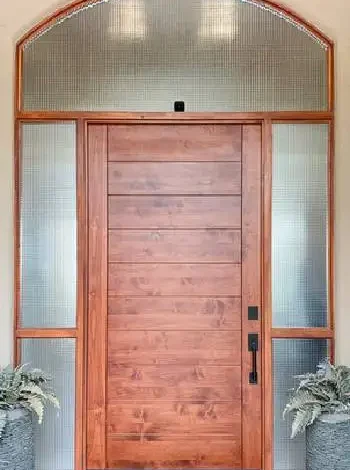
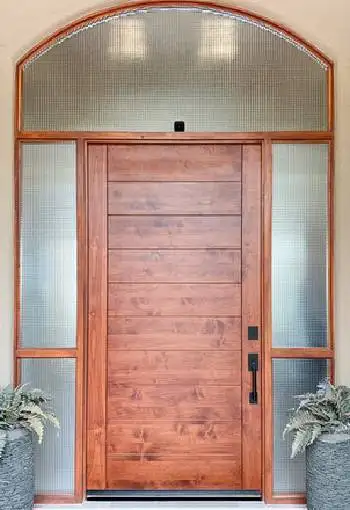
Pet owners considering a Dutch door should evaluate their animal’s size, jumping ability, behavior near entrances, and the door’s lower panel height before selecting a design. Although a Dutch door allows the upper section to open while the lower section remains closed, it should not be relied upon as a pet containment barrier without evaluating the animal’s behavior and the door’s construction.
Unlike conventional front doors, Dutch doors consist of two independently operable sections that can be secured together when the entire entrance needs to remain closed. This arrangement offers flexibility for household activities, but it also introduces considerations for homes with dogs, cats, or other pets.
For homeowners in Scottsdale, AZ, exterior exposure, entryway layout, and daily pet routines can influence whether a Dutch door is a practical choice.
Understanding these considerations helps homeowners select a door that complements their home while supporting safe and convenient everyday use.
How Does a Pet’s Size Affect Dutch Door Selection?
A pet’s size influences how easily it can reach, lean against, or potentially cross the lower section of a Dutch door.
A small dog may have difficulty seeing over a relatively tall lower panel, while a larger dog may be able to place its front paws on the upper edge.
However, height alone does not determine whether a Dutch door can safely separate a pet from an open entrance.
Consider Standing and Jumping Height
A pet’s standing height provides only part of the picture.
Some animals can jump considerably higher than their shoulders, especially when excited or motivated by something outside.
For example, a dog that regularly jumps when greeting visitors may attempt to reach the upper opening when someone approaches the entrance.
A lower section that appears substantial may not prevent that behavior.
Homeowners should observe how their pets behave around existing doors and barriers before selecting a Dutch door configuration.
Account for Growth and Changes in Mobility
Young pets may grow taller or develop new jumping behaviors.
Older animals may experience changes in mobility that affect how they interact with doorways.
A design selected only around a pet’s current size may not remain equally practical throughout the animal’s life.
The entire household’s needs should guide the decision.
Can a Dutch Door Prevent Pets From Running Outside?
A closed lower section may create a physical separation between indoor and outdoor areas, but it should not automatically be treated as an escape-proof barrier.
Some dogs can jump over barriers, push against doors, or react suddenly when visitors arrive.
Cats may also climb or leap through openings that appear inaccessible.
Understanding Door-Dashing Behavior
Door dashing occurs when an animal attempts to move through an entrance as it opens.
This behavior can be especially concerning at a front entrance facing a street, driveway, or sidewalk.
A Dutch door may allow someone to speak with a visitor without opening the entire entrance. However, an excited pet might still attempt to climb or jump over the lower panel.
Pet owners should not assume the divided configuration eliminates the risk of escape.
Use Additional Management When Necessary
Animal welfare organizations, including humane societies, commonly recommend managing pets’ access to exterior doors through supervision, training, and appropriate secondary barriers.
Depending on the animal, practical arrangements may include keeping the pet in another room, using a properly selected pet gate, or maintaining control with a leash during visitor arrivals.
These measures are particularly important for animals with a history of rushing entrances.
A Dutch door can be part of an entryway arrangement, but it should not replace appropriate pet supervision.
How Should Door Hardware Be Evaluated in Homes With Pets?
Dutch doors require hardware that allows the sections to operate independently and, when appropriate, function together as one door.
For pet owners, the location and accessibility of this hardware deserve attention.
Connecting Hardware Between Sections
Dutch doors commonly use a connecting mechanism that secures the upper and lower panels together.
The hardware should operate according to the manufacturer’s instructions and remain properly engaged when the door is used as a complete assembly.
Pet owners should consider whether animals could interfere with exposed components.
For example, a large dog that frequently places its paws against doors may contact hardware positioned within reach.
Handles and Latches
Some animals learn to manipulate certain door handles through repeated observation or accidental contact.
The possibility depends on the animal’s behavior and the hardware design.
A household with a particularly persistent pet may need to consider how easily the door’s operating hardware can be reached or activated.
The selected locking arrangement should remain appropriate for the entrance and comply with applicable safety and egress requirements.
Avoid Loose or Projecting Components
Hardware that becomes loose or projects into frequently used areas can create inconvenience and potential hazards.
Pet owners should inspect door components periodically and address damaged or malfunctioning hardware promptly.
Can Dutch Doors Help Pet Owners Communicate With Visitors?
A Dutch door may provide a convenient way to speak with someone outside while keeping the lower panel closed.
For households with pets, this arrangement can be useful during certain everyday interactions.
For example, a homeowner may want to receive information from a delivery driver without immediately opening the entire entrance.
However, the presence of a pet changes how the doorway should be managed.
Consider Excitable Pets
Some dogs become highly stimulated when visitors approach.
Opening the upper panel may allow the animal to hear, smell, or see someone outside more directly.
That additional stimulation could increase barking, jumping, or attempts to reach the opening.
Pet owners should assess their animal’s response rather than assuming the Dutch door will make visitor interactions calmer.
Keep Pets Away From the Opening When Appropriate
An animal that jumps or climbs may need to remain away from the entrance while the upper section is open.
Training and consistent household routines can help manage these situations.
The door’s design should support those routines without becoming the household’s only method of controlling access.
What Should Pet Owners Know About Door Materials?
Door material affects appearance, maintenance, and how the entrance responds to everyday use.
Homeowners evaluating custom front doors may encounter wood, fiberglass, and other manufacturer-approved materials.
Each material has different characteristics, but no door surface should be assumed resistant to all scratching, chewing, or impact damage.
Wood Dutch Doors
Wood provides flexibility in architectural details, panel arrangements, and natural finishes.
However, pets that scratch or paw at a door may affect its protective coating.
Repeated contact can leave visible marks, particularly around areas frequently reached by paws.
The appropriate finish and maintenance requirements depend on the selected wood and coating system.
Fiberglass Dutch Doors
A fiberglass dutch door may be an option when a manufacturer offers an approved divided-door configuration.
Fiberglass products differ in their surface treatments, construction, and available hardware arrangements.
Homeowners should confirm that the chosen model is intended for Dutch door operation rather than assuming an ordinary fiberglass entry door can be modified into two independently operating sections.
Material durability also varies by product, and fiberglass should not be described as entirely scratch-proof or maintenance-free.
Matching Materials to Household Habits
A pet that rarely approaches the entrance may have little effect on the door’s surface.
Another animal may regularly scratch near the bottom panel when requesting access outside.
Observing these habits can help homeowners discuss finish durability, maintenance expectations, and suitable material choices before ordering.
How Can Dutch Door Design Affect Pet-Related Wear?
Pets often interact with the lower portion of an entrance.
This makes the lower panel’s surface, detailing, and hardware particularly relevant.
Raised Panels and Decorative Details
Decorative moldings or raised panels may create surfaces that collect dirt or show repeated contact from paws.
Simpler panel arrangements may be easier to wipe down, depending on the selected finish.
The choice should reflect both architectural preferences and cleaning expectations.
Lower Door Edges
Areas near the threshold may be exposed to tracked-in dirt, moisture, and frequent cleaning.
For exterior doors, maintaining the appropriate finish and weather seals is important regardless of whether pets are present.
Cleaning Considerations
Pet owners may clean the lower panel more frequently because of paw prints or occasional contact.
Cleaning products should be compatible with the door’s finish.
Harsh chemicals, excessive moisture, or abrasive materials may damage certain coatings.
Following the manufacturer’s care instructions is preferable to assuming every door material can be cleaned the same way.
Does a Dutch Door Provide Better Ventilation for Pets?
A Dutch door can allow air exchange through the upper opening while the lower section remains closed.
However, the resulting airflow depends on outdoor conditions, the home’s layout, and other available openings.
It should not be assumed that opening the upper section will always improve comfort for pets.
Scottsdale’s Hot Weather
During hot weather, opening an exterior Dutch door may introduce warmer outdoor air.
This can be counterproductive when the indoor environment is being cooled.
Pets are also vulnerable to heat-related illness, particularly when adequate cooling, water, or suitable resting areas are unavailable.
A Dutch door should not be treated as a substitute for maintaining appropriate indoor temperatures.
Mild-Weather Use
During comfortable weather, the upper opening may allow fresh air into the home.
However, pets should remain supervised if they can access the opening.
The arrangement should also be evaluated for potential entry by insects or other animals.
Screens and Additional Features
Some households may consider compatible screen arrangements for ventilation.
However, screens are not automatically capable of containing pets.
An animal may push through or damage a screen, especially if motivated by outdoor activity.
Any proposed screen system should be evaluated for compatibility with the door and its intended purpose.
How Does the Entryway Location Affect Pet Safety?
The location of a Dutch door can be as important as its construction.
A door opening onto a fully enclosed courtyard presents different considerations from one opening directly toward a driveway or street.
Front Entrances
Front doors frequently serve visitors, delivery personnel, and household members entering or leaving.
An excited pet may react when the doorbell rings or someone approaches.
The entrance should support a routine that keeps animals safely managed during these interactions.
Enclosed Courtyards
A courtyard may provide an additional boundary between the home and surrounding property.
However, enclosure conditions should be verified rather than assumed.
Open gates, low walls, or gaps in fencing may create escape opportunities.
A Dutch door does not eliminate the need to evaluate the courtyard itself.
Interior Dutch Doors
Dutch doors may also be considered for certain interior applications.
For example, a divided door between a kitchen and hallway can allow household members to communicate across the opening.
However, animals may still jump, climb, or push against the lower section.
The door should not be relied upon as a pet gate unless its suitability has been established for that purpose.
What Should Pet Owners Consider Before Ordering a Dutch Door?
Choosing a Dutch door involves understanding both the entrance and the household’s daily activities.
For homeowners researching residential entry doors, pet-related concerns should be considered alongside the door’s architectural style and construction.
Important considerations include:
- Pet behavior: Does the animal jump, scratch, climb, or rush toward entrances?
- Lower panel height: Could the pet reach or cross the opening when the upper section is open?
- Hardware accessibility: Can the animal contact or manipulate exposed components?
- Door material: Does the selected surface suit the household’s cleaning and maintenance needs?
- Entryway location: Does the door face a street, driveway, enclosed courtyard, or interior room?
- Weather exposure: Is the complete assembly suitable for its intended exterior location?
- Household routines: How will pets be managed when visitors arrive or the upper section is open?
A homeowner with a calm senior dog may have different priorities from someone with an energetic young dog.
Similarly, a household with cats that enjoy climbing may need to approach upper-panel use differently from a household with pets that rarely approach the entrance.
These differences are more useful than selecting a door based solely on a general description of it as pet-friendly.
When Might a Conventional Front Door Be More Practical?
A Dutch door may not be appropriate for every home with pets.
If an animal repeatedly jumps at entrances, attempts to escape, or interferes with door hardware, the independent upper opening may introduce additional management challenges.
A conventional front door may provide a simpler arrangement for households that rarely need partial-door operation.
Homeowners should also consider whether the Dutch door’s added hardware and meeting rail are appropriate for their maintenance preferences and exterior exposure conditions.
The objective is not to select the most unusual door configuration. It is to choose an entrance that works with the home’s layout and its occupants’ everyday needs.
Making a Dutch Door Work in a Pet-Friendly Home
A Dutch door can offer flexible access and an appealing architectural feature, but its usefulness for pet owners depends on more than the divided design.
The animal’s behavior, the lower panel’s height, hardware accessibility, material durability, and surrounding entryway all influence whether the configuration is practical.
For Scottsdale homeowners, outdoor heat and the relationship between the entrance and nearby streets or courtyards also deserve attention.
The best approach is to evaluate how household members and pets actually use the opening before selecting a Dutch door.
A properly considered design can support everyday routines while allowing homeowners to maintain appropriate supervision and separate pet-safety measures where necessary.
About Anasazi Architectural Door
Based at 115 E Pioneer St in Phoenix, Arizona, Anasazi Architectural Door is a family-owned and operated company serving Scottsdale and surrounding communities. Their established background includes custom wood door manufacturing and installation, with offerings that include Dutch doors and other residential entry designs; the company also distributes recognized door and hardware brands. Readers can find their Phoenix office on Google Maps or call (602) 237-2240 for information about available door styles and materials.