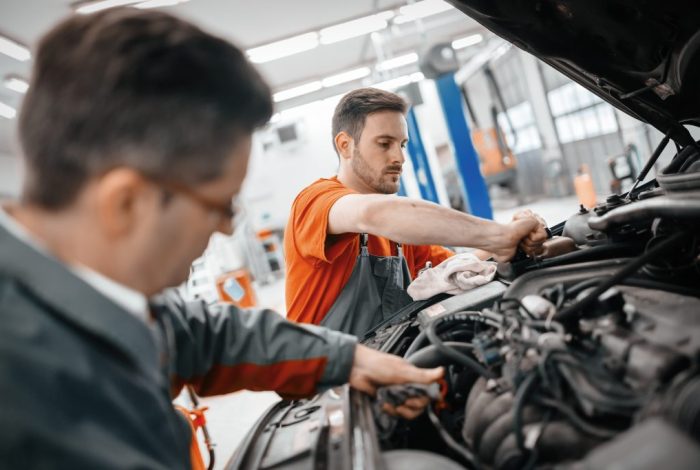
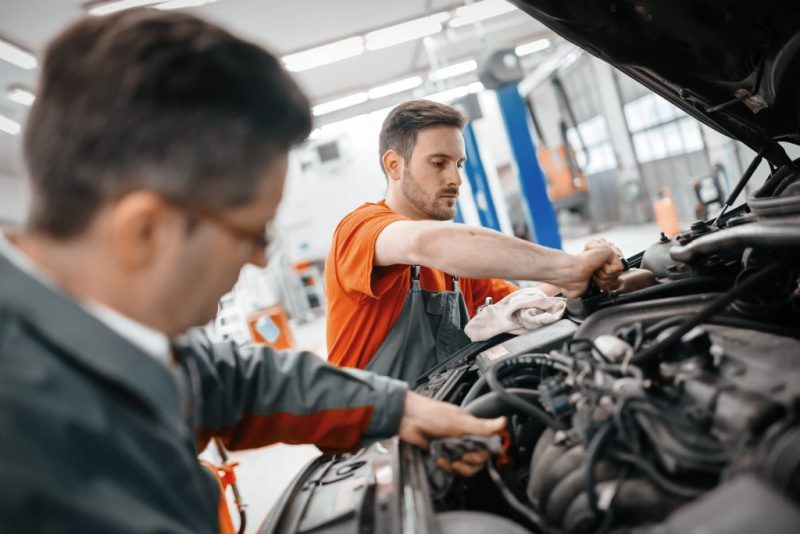
Hooking up a camper, boat or utility trailer changes how hard a vehicle works. The engine has to move more weight and push a larger shape through the air, and most of that extra effort turns into heat. The cooling system is what keeps that heat under control.
Vehicle makers know this, which is why their owner’s manuals treat towing as a special case. This article explains how a trailer adds heat, why the transmission is part of the same story, and what a professional cooling system inspection looks at before a long haul.
Why Does Towing Put So Much Strain on the Cooling System?
An engine converts fuel into motion, and a large share of that energy leaves as heat. Under normal driving, the cooling system carries the heat away through coolant that circulates through the engine and out to the radiator. There, airflow and the cooling fans release it into the outside air.
A trailer raises the workload on every part of that loop. The engine runs at higher load for longer stretches, especially on climbs. It also moves more slowly up long grades, which reduces the natural airflow through the radiator just when the most heat is being produced.
Manufacturers spell this out plainly. Kia’s owner’s manual notes that, because of the higher load while towing, overheating may occur on hot days or while driving uphill. Toyota warns that towing a loaded trailer up a long, steep incline in temperatures above 30°C may cause the engine to overheat. Hyundai advises drivers to watch the coolant temperature gauge closely when towing on grades steeper than 6%.
Airstream, which builds travel trailers, lists the situations most likely to cause a temporary cooling overload. They include hot days on a long grade, slowing down after higher-speed driving, and long idle periods in traffic.
Why Is the Transmission Part of the Same Conversation?
On most vehicles with an automatic transmission, the transmission fluid is cooled by the same radiator that cools the engine. The fluid passes through a cooler built into the radiator, so the radiator is shedding heat from two systems at once.
Towing heats both. The transmission works harder to move the extra weight, its fluid runs hotter, and that heat ends up back in the radiator. A cooling system that is only just keeping up with the engine has less capacity left for the transmission.
That is why manufacturer maintenance schedules often change for towing. Ram’s owner’s manual, for example, says that drivers who regularly tow for more than 45 minutes of continuous operation should change the automatic transmission fluid and filters on the schedule for frequent trailer towing. Kia’s manual says a vehicle that regularly tows will need service more often. It specifically lists engine oil, axle lubricant, cooling system fluid and brake condition.
Some trucks come with an auxiliary transmission cooler as part of a towing package. Others rely on the radiator alone. Knowing which setup a vehicle has is part of understanding how much extra heat it can handle.
What Can Go Wrong When a Cooling System Is Past Its Prime?
A cooling system can work perfectly well in daily driving and still struggle with a trailer behind it. The extra load tends to expose weaknesses that were already there.
Technical references on cooling system diagnosis point to a handful of common causes of overheating:
- A thermostat that does not open fully, which restricts coolant flow to the radiator.
- Reduced airflow through the radiator, from debris on the fins, a failing fan or a weak fan clutch.
- A worn water pump, which circulates coolant less effectively.
- Pressure loss from leaks, including a radiator cap that no longer holds its rated pressure.
- The wrong coolant or an incorrect mixture, which can reduce heat transfer and corrosion protection.
The pressure detail is easy to overlook. Cooling systems run under pressure, which raises the coolant’s boiling point. A cap or hose that cannot hold pressure lowers that margin. Higher temperatures from towing can then push an aging hose, a worn water pump seal or a corroded radiator past its limit.
What Does a Professional Cooling System Inspection Cover?
A cooling system check before a towing season goes beyond topping up fluid. Technical guidance for shops describes a fuller process. Depending on the vehicle, it can include:
Pressure testing the system and the cap
A pressure tester attaches where the radiator or reservoir cap normally sits and raises the system to its rated pressure. A sound system should hold that pressure. If the pressure drops, there is a leak somewhere. The cap is tested separately, because a cap that releases too early lets the system lose pressure and coolant under load.
Checking coolant condition and strength
Coolant breaks down over time. A technician looks at its condition and checks that the mixture gives the right protection for both summer heat and winter cold. Contamination, such as oil in the coolant, is a sign of a deeper problem that needs further diagnosis.
Inspecting hoses, clamps and the radiator
Hoses soften, crack or swell with age, and clamps can loosen. The radiator is checked for leaks, damage and blocked fins that restrict airflow.
Checking the thermostat, water pump and drive belt
The thermostat needs to open at the right temperature. The water pump is checked for leaks and noise. Where a belt drives the pump, the belt and tensioner are inspected too, because a slipping or cracked belt affects circulation.
Confirming the cooling fans work
Electric fans and fan clutches matter most at low speed and on climbs, exactly when a towing vehicle needs extra airflow.
This kind of inspection is part of routine auto maintenance for vehicles that tow. It is most useful before the towing season starts, not after a temperature gauge climbs on a grade.
How Does This Apply to Towing Around Terrace?
Towing out of Terrace usually means highway driving along Highway 16 or Highway 37, often with long stretches between towns and services. A trailer trip to a lake, a campsite or a work site can combine sustained highway speeds, climbs and slow sections behind other traffic. Those are the conditions manufacturers flag for cooling overloads.
Distance matters too. A cooling problem that shows up far from the nearest auto service becomes a much bigger inconvenience. It is also a safety concern when a trailer is involved. Having the system checked in town before the season, rather than finding a weak hose on a remote stretch of highway, is the practical way to reduce that risk.
Cold weather does not take the cooling system off the hook either. Trailers carrying snowmobiles or equipment in winter still put the engine under load. The coolant mixture also has to protect the engine in low temperatures, so its strength matters year-round.
When Should a Towing Vehicle Have Its Cooling System Checked?
The owner’s manual is the starting point. Many manufacturers list separate service intervals for severe use, and regular towing usually counts. Beyond the schedule, a few moments make particular sense for an inspection:
- Before the first towing trip of the season, especially if the vehicle has not towed for months.
- Before buying or renting a heavier trailer than the vehicle usually pulls.
- After any cooling system repair, to confirm the system holds pressure once it is sealed again.
- When planning a long trip with sustained climbs or remote stretches.
Auto repair shops that offer cooling system inspections can usually look at the transmission fluid and brakes in the same visit. Those two systems also work harder when towing, so checking them together makes sense.
A good car mechanic will also ask how the vehicle is used: how heavy the trailer is, how often it tows, and where. That context shapes what gets checked and which service intervals apply.
What Should Drivers Bring to the Conversation?
A few details help a shop give useful advice:
- the approximate weight of the trailer and its load
- how often and how far the vehicle tows
- whether the vehicle has a factory towing package or an auxiliary transmission cooler
- any past overheating, coolant loss or sweet smells after a drive
- the vehicle’s service history, including the last coolant and transmission fluid service
With that information, the inspection can focus on the components most likely to be stressed by that particular kind of towing. Any automotive repair needed can be done before the trip rather than during it.
The Bottom Line
Towing adds heat to both the engine and the transmission, and the radiator has to handle both. Vehicle makers recognize this in their towing warnings and severe-service schedules. A cooling system that copes with daily driving can still be caught out by a heavy trailer on a long climb.
A professional inspection covers the system’s pressure, the cap, coolant condition, hoses, thermostat, water pump, belt and fans. It is the most reliable way to find weak points before they show up on the highway.
About Rain Coast Service Centre
From their location on Keith Avenue in Terrace, BC, Rain Coast Service Centre provides mechanical maintenance and repair, including cooling system inspections, radiator and transmission flushes, brake work and diagnostics. They also handle tire service, quick lube and vehicle washing. Their team can be reached at (250) 638-0072, or drivers can see their location on Google.